
Transfer Factor and the Conserved Sequences Discovery: Lawrence's 1999 Breakthrough
Transfer factor molecules and their immune effects: NK cell activation, cytokine production, T cell activity, and complementary cancer treatment
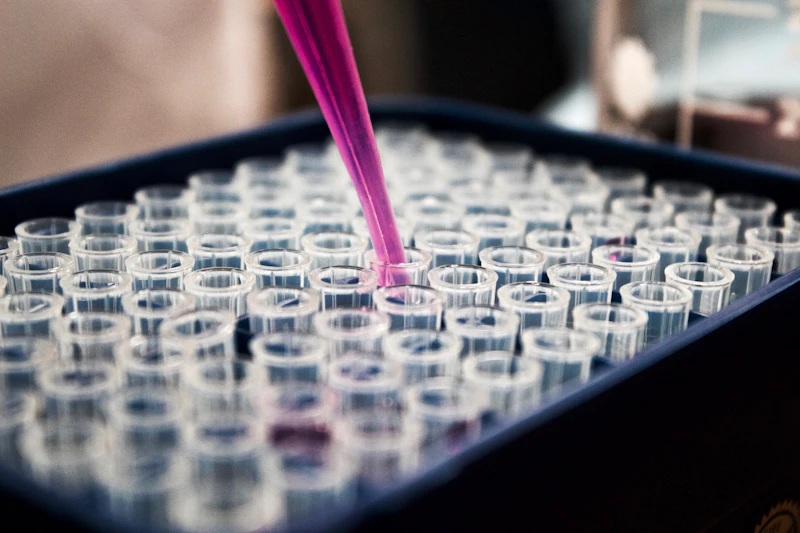
Molecular microscopy: the tool behind Lawrence's search for conserved sequences in Transfer Factor molecules
🧬 Transfer Factor and the Conserved Sequences Discovery:
Lawrence's 1999 Breakthrough
An Educational Review of the Biotherapy Publication by the Father of Transfer Factor
📑 Table of Contents
- Introduction: The Man Who Named Transfer Factor
- The 1999 Lawrence Study at a Glance
- Conserved Sequences: Nature's Unchanged Code
- Natural Killer Cell Activation
- Cytokine Production: Amplifying the Alarm System
- T Cell Activity: Sharpening the Precision Strike
- Complementary Treatment Potential in Cancer
- What Further Research Must Answer
- Conclusion
- Frequently Asked Questions (FAQ)
Introduction: The Man Who Named Transfer Factor
In 1949, a young immunologist named H. Sherwood Lawrence made a discovery that would define his entire career: he found that immune sensitivity could be transferred from one person to another through a small, dialyzable molecule extracted from white blood cells. He named it Transfer Factor.
Fifty years later, in 1999, Lawrence returned to the molecule he had discovered with a new question—not just what it does, but what it is made of. Publishing in the journal Biotherapy, he reported the identification of conserved sequences in transfer factor molecules—molecular "fingerprints" preserved across biology that hint at why these molecules are so universally active in the immune system.
The same body of work also reinforced the functional picture: transfer factors enhance the immune system's response to cancer by activating natural killer cells, boosting cytokine production, and increasing T cell activity—three pillars of cancer immunotherapy.
🔬 The 1999 Lawrence Study at a Glance
Lawrence's 1999 work combined molecular analysis (finding conserved sequences inside Transfer Factor molecules) with functional immunology (measuring how those molecules arm the immune system against cancer).
- Conserved Sequences: Transfer Factor molecules contain sequence regions that remain remarkably unchanged—evidence of a fundamental, evolutionarily protected immune function.
- NK Cell Activation: Transfer factors were found effective in activating natural killer cells, the white blood cells crucial to the body's defense against cancer.
- Cytokine Enhancement: Transfer factors enhanced the production of cytokines—the signaling molecules that regulate the immune response to cancer.
- T Cell Stimulation: Transfer factors increased the activity of T cells, the white blood cells that directly attack and destroy cancer cells.
🧬 Conserved Sequences: Nature's Unchanged Code
The headline discovery of the 1999 paper is molecular: Lawrence identified conserved sequences within Transfer Factor molecules. But what does "conserved" actually mean, and why should anyone care?
Think of a famous song covered by hundreds of artists across decades. Verses may change, arrangements may differ—but the chorus stays identical in every version, because that chorus is the song's identity.
In molecular biology, a conserved sequence is that chorus: a stretch of a molecule that remains unchanged across species and across time because any mutation to it would destroy its essential function. When Lawrence found conserved sequences inside Transfer Factor, it signaled that these molecules carry an ancient, universal immune language—one that nature has protected for millions of years.
Why This Matters Practically
Cross-Species Activity
Conserved sequences help explain why transfer factor preparations can remain biologically active across different species—a long-observed but poorly explained phenomenon.
Functional Core
The unchanged regions likely form the molecule's active "business end"—the part that docks with immune cells and delivers its message.
Identification & Quality
Knowing the conserved sequences gives researchers molecular markers to identify, standardize, and verify transfer factor preparations.
Research Roadmap
Conserved regions point future studies toward the exact structures responsible for immune modulation—and potential therapeutic optimization.
⚔️ Natural Killer Cell Activation
Moving from molecular structure to immune function, Lawrence's work confirmed that transfer factors are effective in activating natural killer cells (NK cells)—a type of white blood cell that plays a crucial role in the body's defense against cancer.
NK cells are the immune system's rapid-response unit. Unlike T cells, they do not need prior "training" on a specific antigen. They patrol the body and eliminate cells that have lost their normal identity—a classic hallmark of early cancer. The problem? Tumors release signals that put NK cells to sleep.
Many cancers survive not by hiding, but by disabling the NK cells that detect them. Lawrence's findings matter because Transfer Factor was shown to reactivate these suppressed killers—restoring their ability to recognize, target, and destroy cancerous cells.
📡 Cytokine Production: Amplifying the Alarm System
The 1999 study also found that transfer factors enhance the production of cytokines—the signaling molecules that help regulate the immune response to cancer.
If NK and T cells are soldiers, then cytokines are the radio network that coordinates them. A weak broadcast means a slow, disorganized defense. By boosting cytokine production, Transfer Factor effectively turns up the volume of the immune system's emergency broadcast, ensuring every defender receives the alert and knows where to strike.
| Immune Component | Normal Role Against Cancer | Effect of Transfer Factor (Lawrence 1999) |
|---|---|---|
| Cytokine Signaling | Coordinates and regulates immune attack | Production enhanced; response better organized |
| Natural Killer Cells | Instant destruction of abnormal cells | Activated; cancer targeting and killing improved |
| T Cells | Precision attack and immune memory | Activity increased; direct destruction strengthened |
| Overall Immune Response | Baseline surveillance | Amplified, multi-layered anti-cancer defense |
🎯 T Cell Activity: Sharpening the Precision Strike
The third functional pillar in Lawrence's findings: transfer factors increase the activity of T cells—another type of white blood cell that can directly attack and destroy cancer cells.
- Cytotoxic T cells (CD8+) are the precision snipers: they lock onto cancer cells presenting abnormal antigens and eliminate them one by one.
- Helper T cells (CD4+) are the field commanders: they sustain the operation, recruit reinforcements, and build long-term immune memory.
By increasing T cell activity, Transfer Factor strengthens not only the immediate strike against tumors but also the lasting memory that helps prevent cancer from returning. Combined with NK activation and cytokine amplification, this completes a three-layer immune upgrade: detect faster, signal louder, strike harder.
↑ Back to top🤝 Complementary Treatment Potential in Cancer
Lawrence's conclusions point toward a practical horizon: these findings suggest that transfer factors may have the potential to be used as a complementary treatment for cancer—either on their own or in combination with other therapies.
| Usage Scenario | Rationale from the 1999 Findings | Research Status |
|---|---|---|
| TF as Immune Support Alone | Activates NK cells, boosts cytokines, raises T cell activity | Promising laboratory evidence; clinical confirmation needed |
| TF + Conventional Therapy | May help maintain immune competence during aggressive treatment | Complementary-role hypothesis under investigation |
| TF + Immunotherapy | Shared goal: re-arming the immune system against tumors | Early-stage conceptual synergy; trials required |
| TF in Prevention Strategies | Stronger baseline surveillance may catch abnormal cells earlier | Exploratory; long-term studies needed |
"Complementary" does not mean "alternative." A complementary approach is used alongside evidence-based cancer care—not instead of it. Nothing in the 1999 publication suggests that Transfer Factor can replace surgery, chemotherapy, radiation, or modern immunotherapy.
🔭 What Further Research Must Answer
Lawrence was explicit about the boundaries of his findings: further research is needed to fully understand the mechanisms by which transfer factors kill cancer cells and to determine the most effective ways to use them in cancer treatment.
- Mechanism: Exactly how do conserved sequences dock with immune cell receptors to trigger activation?
- Dosing: What concentrations produce optimal NK, cytokine, and T cell responses in humans?
- Specificity: Which cancer types are most responsive to TF-supported immune activation?
- Combination protocols: How should Transfer Factor be scheduled alongside chemotherapy, radiation, or checkpoint inhibitors?
- Clinical validation: Do laboratory immune enhancements translate into measurable patient outcomes in controlled trials?
💡 Conclusion
Half a century after first naming the molecule, H. Sherwood Lawrence delivered one of its most important scientific portraits: Transfer Factor is not a random biological byproduct. It is a molecule with conserved sequences—an evolutionarily protected core—whose functional effects include activating natural killer cells, enhancing cytokine production, and increasing T cell activity against cancer.
Together, these properties position transfer factors as a promising complementary cancer treatment candidate—whether used alone as immune support or combined with other therapies. The laboratory evidence is compelling; the clinical journey is still ahead.
For readers, the takeaway is both simple and profound: the immune system already possesses the weapons to fight cancer—Transfer Factor appears to be one of nature's oldest instruction manuals for aiming them.
↑ Back to topFrequently Asked Questions (FAQ)
Who was H. Sherwood Lawrence?
H. Sherwood Lawrence was the American immunologist who discovered transfer factor in 1949, demonstrating that immune sensitivity could be transferred between individuals via a small dialyzable molecule. The 1999 Biotherapy paper reviewed here represents his later work identifying conserved sequences within those molecules.
What are "conserved sequences" in simple terms?
Conserved sequences are parts of a molecule that remain unchanged across species and over long evolutionary time. Nature preserves them because they perform an essential function. Finding them in Transfer Factor indicates the molecule carries a fundamental, universal role in immune communication.
Do transfer factors kill cancer cells directly?
No. The evidence shows that transfer factors kill cancer cells indirectly—by enhancing the immune system's response: activating NK cells, boosting cytokine signaling, and increasing T cell activity. The immune cells do the killing; TF sharpens their aim.
What is the difference between NK cells and T cells?
NK cells act instantly and non-specifically against abnormal cells (innate immunity). T cells require antigen recognition but deliver precision attacks and long-term memory (adaptive immunity). Lawrence's 1999 findings showed that Transfer Factor strengthens both arms of this defense.
What does "complementary treatment" mean here?
A complementary treatment is used together with standard medical care to support outcomes—not as a replacement. The 1999 study suggests Transfer Factor may serve this supportive role in cancer care, either alone as immune support or alongside other therapies, pending further clinical research.
Should cancer patients use Transfer Factor products now?
Patients must always consult their oncologist before adding any supplement, including Transfer Factor, to their regimen. Laboratory findings are an early stage of evidence; individual treatment decisions require professional medical judgment and full disclosure of all products being used.
Why does a 1999 molecular study still matter in 2026?
Because it connected structure to function: the conserved sequences Lawrence identified give modern researchers molecular targets for standardization, quality control, and mechanism studies—while the immune-function data (NK, cytokines, T cells) continue to inform today's cancer immunotherapy research.
